Fencing
Garden and boundary fencing installation and replacement
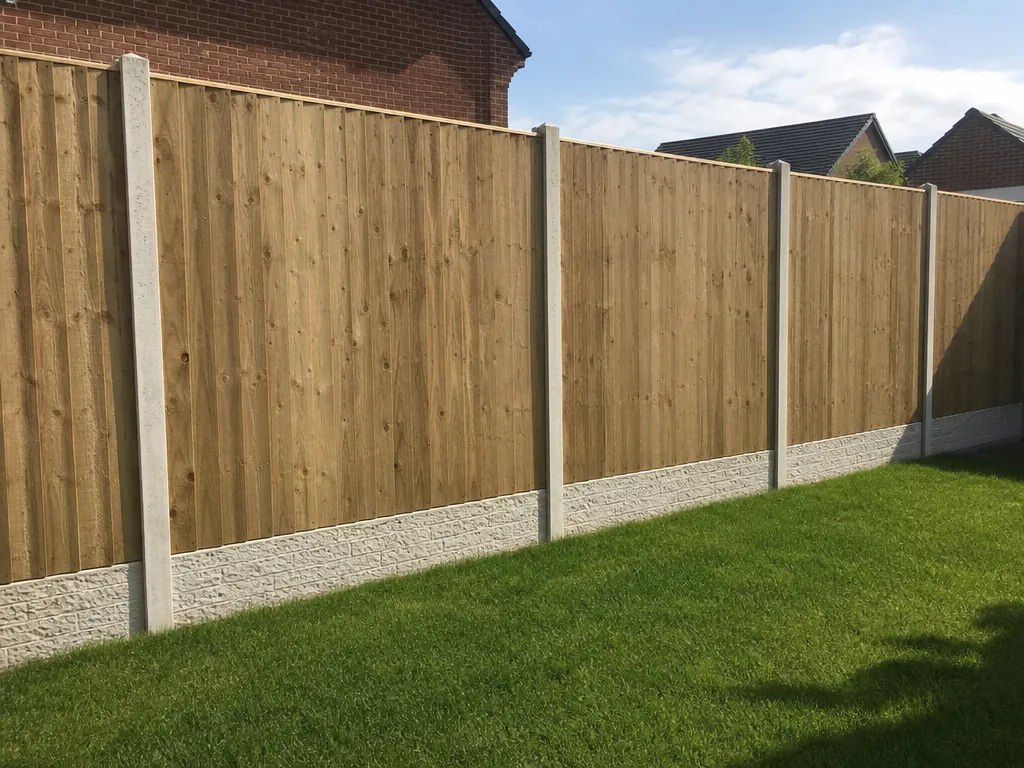
We install garden and boundary fencing throughout South East London and Kent, from single panel replacements after a storm to a full boundary rebuild with concrete posts and gravel boards.
Fencing is judged on how it survives wind and wet ground. Post fixing, post material and ground contact decide that, far more than the panel style does.
Fence types we install
Close-board (feather-edge) fencing is built board by board on site and is the strongest and longest-lasting option for an exposed boundary. Panel fencing — lap, overlap or slatted — is quicker and cheaper and easy to replace one section at a time. Picket and post-and-rail suit front boundaries where you want to keep the view open.
Posts, gravel boards and ground contact
Timber posts rot at ground level first. Concrete posts with concrete gravel boards keep the timber out of wet soil and let you swap a damaged panel without digging anything out. Where timber posts suit the look better, we use pressure-treated posts set in concrete with the ground line detailed properly.
- Concrete posts and gravel boards for longevity and easy panel replacement
- Pressure-treated timber posts set in concrete where appearance matters
- Postcrete or wet-mix haunching depending on ground conditions
- Old posts and concrete dug out rather than cut off at ground level
Boundaries, heights and neighbours
Fencing sits on a boundary, which makes it a shared subject. Deeds usually indicate which boundary you are responsible for. As a general rule in England, a rear garden fence up to two metres, or one metre where it adjoins a road used by vehicles, falls within permitted development — but listed buildings and some conservation areas differ, so check with your council. We will happily talk to a neighbour about access if we need to work from their side.
Options we install
Close-board fencing
Feather-edge boards on arris rails; the strongest standard garden fence.
Lap and overlap panels
Cost-effective, quick to install and simple to replace.
Slatted and contemporary panels
Modern look with a defined gap; often used for garden screening.
Picket and post-and-rail
Low front boundaries that keep sight lines open.
Gates
Side gates and driveway gates hung on suitable posts and ironmongery.
How the job runs
- 1Free on-site estimateWe measure the run, check levels and look at access and existing posts.
- 2RemovalOld fence, posts and concrete taken out and removed from site.
- 3Posts setPositions marked, holes dug, posts set plumb and in line.
- 4Panels or boards fittedGravel boards, rails and boards or panels fixed to line and level.
- 5Clear upWaste taken away and the ground left tidy.
Fencing by area
Each area page covers the ground conditions, council rules and property types that actually affect fencing there.
Fencing guides
The detail behind the quote — materials, build-up, drainage, rules and maintenance.
Close board vs panel fencing: which to choose
Close board, lap panel, featheredge and picket fencing compared — strength, lifespan, exposure, repairability and which posts suit each.
Fence repairs and replacement
When a fence can be repaired and when it should be replaced: snapped posts, rotten gravel boards, leaning runs and storm damage.
Fencing — frequently asked questions
What type of fencing lasts longest?
Close-board fencing on concrete posts with concrete gravel boards. The timber never sits in wet soil, individual boards can be replaced, and the structure resists wind loading better than a panel sitting in a slotted timber post.
How high can a garden fence be?
In England, permitted development normally allows up to two metres for a fence, wall or gate, reduced to one metre where it adjoins a highway used by vehicles. Listed buildings, conservation areas and some estates have tighter rules, so check with your local council before going higher.
Can you replace just one or two panels?
Yes. If the posts are sound we can replace individual panels or boards. If the posts have rotted at ground level, replacing panels alone is a short-term fix and we will say so.
Do you take the old fence away?
Yes. Removal and disposal of the old fence, posts and concrete are included in the quote unless you would rather keep the timber.
Related services
Thinking about fencing?
Free on-site estimate, written itemised quote, no pressure.