Patios
Patio installation and garden paving built on a proper base
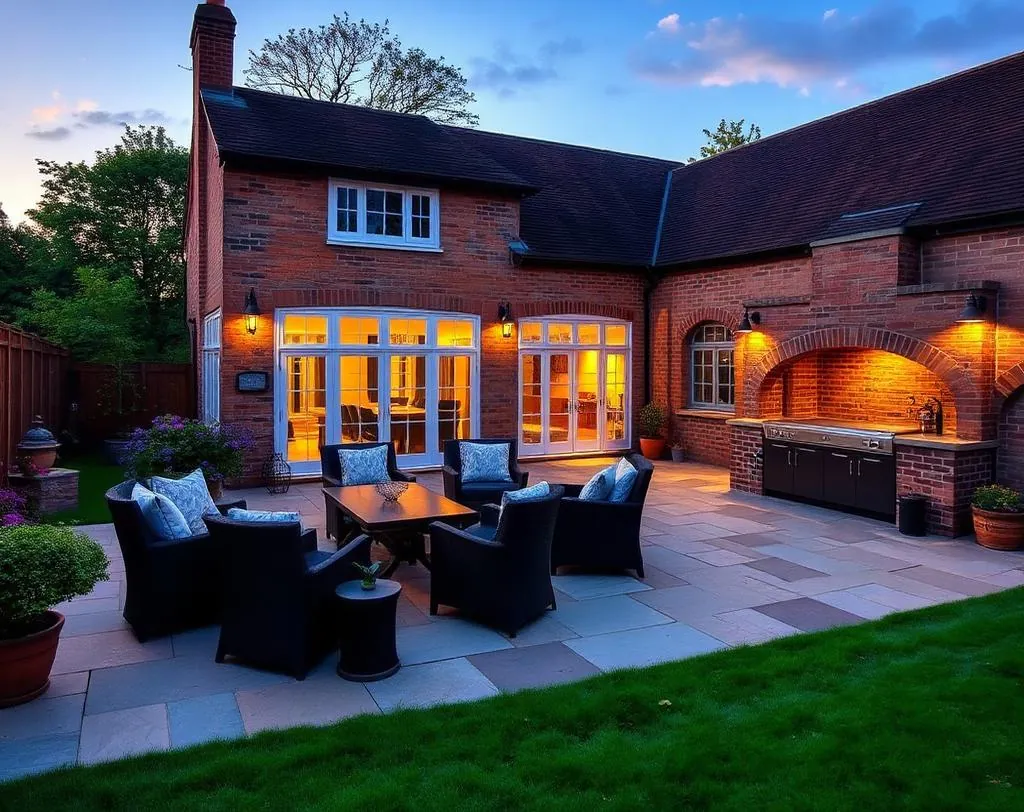
We are patio contractors building garden patios, paths and paved seating areas across South East London and Kent. Sandstone, limestone, granite, porcelain and concrete paving all behave differently, and the bedding method has to suit the slab.
The two things that spoil a patio are movement and standing water. Both come from the base and the falls, which is where most of our time on site actually goes.
How we lay a patio
Garden paving should be laid on a full mortar bed, not on five dabs. Spot-bedding is the single most common cause of rocking, cracked and stained slabs, especially with porcelain and thin natural stone.
- Excavate and remove spoil, allowing for slab thickness, bed and sub-base
- Compact a graded sub-base across the whole area
- Prime the back of natural stone and porcelain where the slab requires it
- Bed every slab fully on mortar, to a fall away from the house
- Keep paving at least 150mm below the damp proof course, or drain it properly
- Point the joints and clean down as we go
Choosing paving for a garden
Indian sandstone is the most common choice and the most forgiving on price. Porcelain costs more but stays clean, does not fade and needs almost no maintenance. Granite is the toughest. Riven stone gives a traditional, textured look; sawn and calibrated stone gives tight, even joints.
We bring samples to the estimate so you can see them wet and dry against your house brickwork, because paving colour changes completely in the rain.
Steps, levels and edging
Very few gardens are flat. Where there is a fall away from the house we either build steps down to the lawn, or retain the level with a low wall so the terrace stays usable. Getting the riser heights consistent is a detail people notice every day and rarely mention until it is wrong.
Options we install
Indian sandstone
Warm, riven and cost-effective; the standard UK patio choice.
Porcelain
Colour-stable, low maintenance and slip-rated; needs priming and precise bedding.
Granite
Extremely hard-wearing with a fine, even finish.
Limestone
Smooth and uniform, ideal for contemporary gardens.
Concrete paving
Budget-friendly with consistent sizing and a wide range of finishes.
How the job runs
- 1Free on-site estimateWe check levels, drainage, access and the damp course height.
- 2Design and samplesLayout, slab size and pattern agreed before ordering.
- 3Excavation and sub-baseDug out, spoil removed, base compacted.
- 4LayingFull mortar bed, correct falls, cuts kept to the edges.
- 5Pointing and clean downJointed, washed off and the garden left tidy.
Patios by area
Each area page covers the ground conditions, council rules and property types that actually affect patios there.
Patios guides
The detail behind the quote — materials, build-up, drainage, rules and maintenance.
Choosing patio paving: porcelain, sandstone, limestone and granite
Porcelain, Indian sandstone, limestone, granite and concrete paving compared for UK gardens: cost, grip, staining and maintenance.
Patio drainage, falls and levels against the house
Why patios pond, how much fall paving needs, what the damp proof course rule means in practice, and the drainage options when levels are tight.
Patio maintenance and repairs
Keeping a patio clean without damaging it, why joints crack and slabs rock, and what repointing or relaying involves.
Patios — frequently asked questions
How long does a new patio take to install?
A typical rear garden patio takes around three to five working days from breaking ground to pointing, plus curing time before heavy use. Restricted access, steps, retaining walls or a large area add to that.
Which is better, porcelain or natural stone?
Porcelain does not fade, resists staining and is easy to keep clean, but it costs more and demands precise laying. Natural stone is cheaper, more characterful and easier to cut on site, but it is porous and will weather and need occasional cleaning. Both last decades when laid properly.
Why does my existing patio hold water?
Almost always because it was laid flat, laid to fall towards the house, or spot-bedded so it has since dropped in places. A patio needs a consistent fall away from the building — roughly one in eighty is a common working figure — with somewhere for the water to go.
Can you build a patio over my existing one?
Sometimes, if the old base is sound and the extra height will not breach the damp proof course or step levels. More often it is better value to lift the old paving and correct the base while it is open.
Related services
Thinking about patios?
Free on-site estimate, written itemised quote, no pressure.