Driveways
Block paving and driveway installation across South East London and Kent
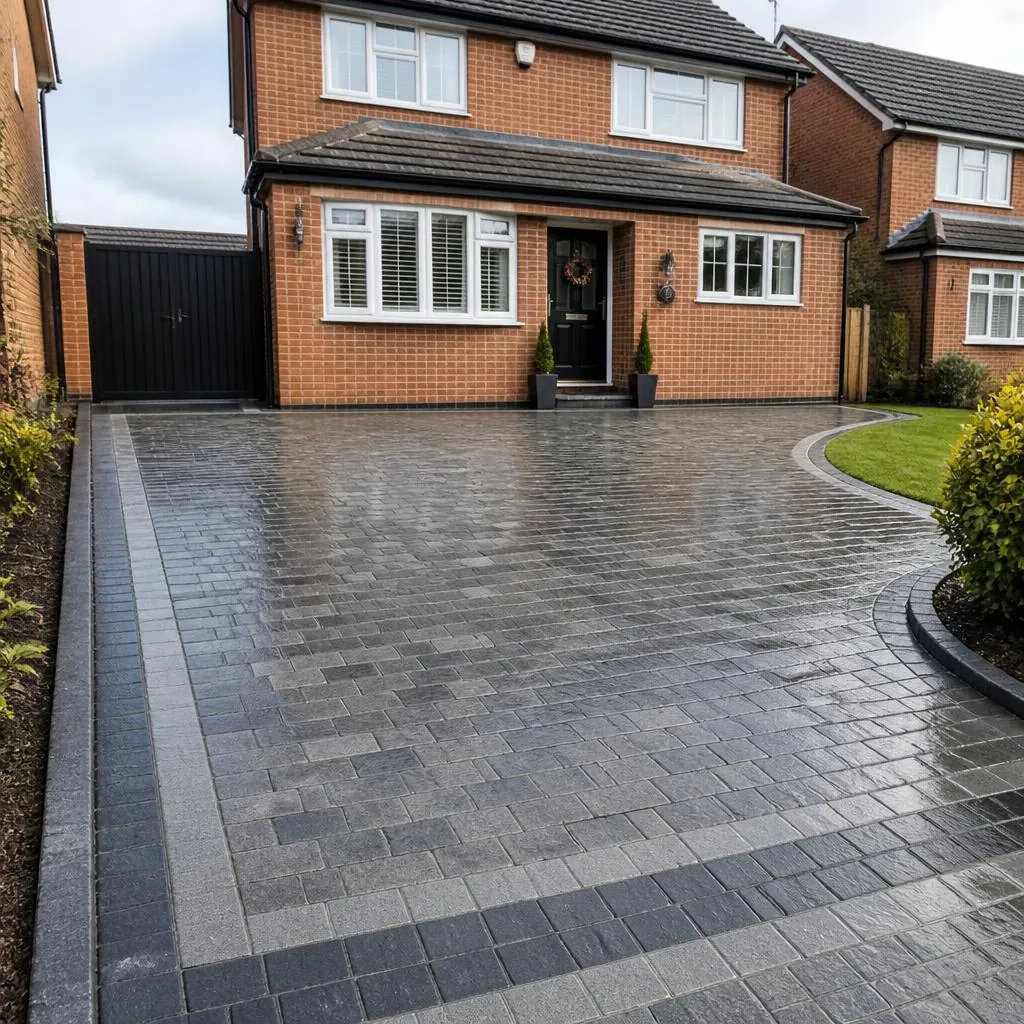
We are driveway installers working throughout the Bromley, Croydon and Lewisham boroughs. Most of what we build is block paving, but the material is only part of the job — a new driveway is really an excavation, a sub-base and a drainage decision with paving laid on top.
Every driveway we quote is measured on site. You get a written breakdown of the excavation depth, sub-base, edge restraint, drainage method and the paving itself, so you can compare quotes properly.
How we build a driveway
Driveway construction fails from the bottom up, not the top down. Rutting, sinking and weed-filled joints almost always trace back to a shallow dig, an uncompacted sub-base or missing edge restraint rather than to the blocks themselves.
- Excavate to a depth that suits the ground and the loading, and cart the spoil away
- Lay and compact a graded sub-base in layers, not in one pass
- Set haunched edge restraints so the paving cannot spread
- Screed the laying course, lay to pattern, cut in the borders, compact and joint
- Deal with surface water on the plot — not by running it onto the road
Driveway replacement
If you already have a driveway, replacement usually means breaking out the old surface and, in many cases, the old base as well. Laying new paving on top of a tired concrete or tarmac base is quicker and cheaper, but it raises the level against your damp course and hides whatever is failing underneath. We will tell you which of the two your driveway actually needs.
Drainage and planning permission
In England, a front driveway can normally be laid under permitted development if the surface is permeable, or if rainwater runs to a lawn, border or soakaway inside your boundary. A non-permeable surface over five square metres draining onto the road needs planning permission. A dropped kerb is a separate application to your council. We build to whatever your council approves — always confirm the position with them before work starts.
Options we install
Block paving
Concrete blocks in herringbone or stretcher bond; the standard choice for cost, repairability and load spread.
Clay pavers
Fired clay keeps its colour far longer than concrete and suits period frontages.
Permeable block paving
Wider joints and an open-graded sub-base let water through, which keeps you inside permitted development.
Granite setts
Hard-wearing and traditional; often used as borders and feature bands rather than a whole drive.
Natural stone and porcelain
Used on driveways only in the correct thickness and bedded properly.
How the job runs
- 1Free on-site estimateWe measure, look at levels, access and drainage, and talk through materials.
- 2Written quoteItemised so you can see what the build-up actually is.
- 3Excavation and muck-awayDug to depth, waste removed, existing services located.
- 4Sub-base and edgingsCompacted in layers with haunched restraints.
- 5Paving and jointingLaid, cut, compacted, jointed and swept clean.
Driveways by area
Each area page covers the ground conditions, council rules and property types that actually affect driveways there.
Driveways guides
The detail behind the quote — materials, build-up, drainage, rules and maintenance.
Block paving driveways: materials, patterns and build-up
How a block paving driveway is actually built: sub-base depth, edge restraint, laying patterns, concrete blocks versus clay pavers, and what makes one last.
Driveway drainage and planning permission in England
How surface water rules affect a new driveway in England: permitted development, permeable paving, soakaways, channel drains and dropped kerb applications.
Driveway maintenance and repairs
How to keep a block paving driveway in good order, what sinking and rutting actually mean, and when a repair is enough instead of a full replacement.
Driveways — frequently asked questions
How long does a new driveway take?
A straightforward single driveway is commonly a three to five day job: a day to break out and dig, a day for sub-base and edgings, then laying, cutting and jointing. Larger drives, retaining walls, awkward access or bad weather extend that. We give you a realistic day count with the quote.
What is the difference between block paving and tarmac?
Block paving can be lifted and relaid in sections, which makes repairs and service access simple, and it offers far more choice of colour and pattern. Tarmac is quicker to install over a large area and has no joints to weed. Both need the same quality of sub-base underneath.
Do you fit dropped kerbs?
The crossover itself is applied for through your council and carried out to their specification. We build the driveway up to the boundary so it meets the crossover correctly, and we can talk you through the application process.
How do I maintain block paving?
Sweep it, keep the joints topped up with kiln-dried sand or a jointing compound, and treat weeds before they establish. Pressure wash gently and at an angle so you do not blast the jointing out; resand afterwards. Sealing is optional and needs redoing every few years.
Related services
Thinking about driveways?
Free on-site estimate, written itemised quote, no pressure.